
Why Your Child's Fear of Water is Actually a Good Thing
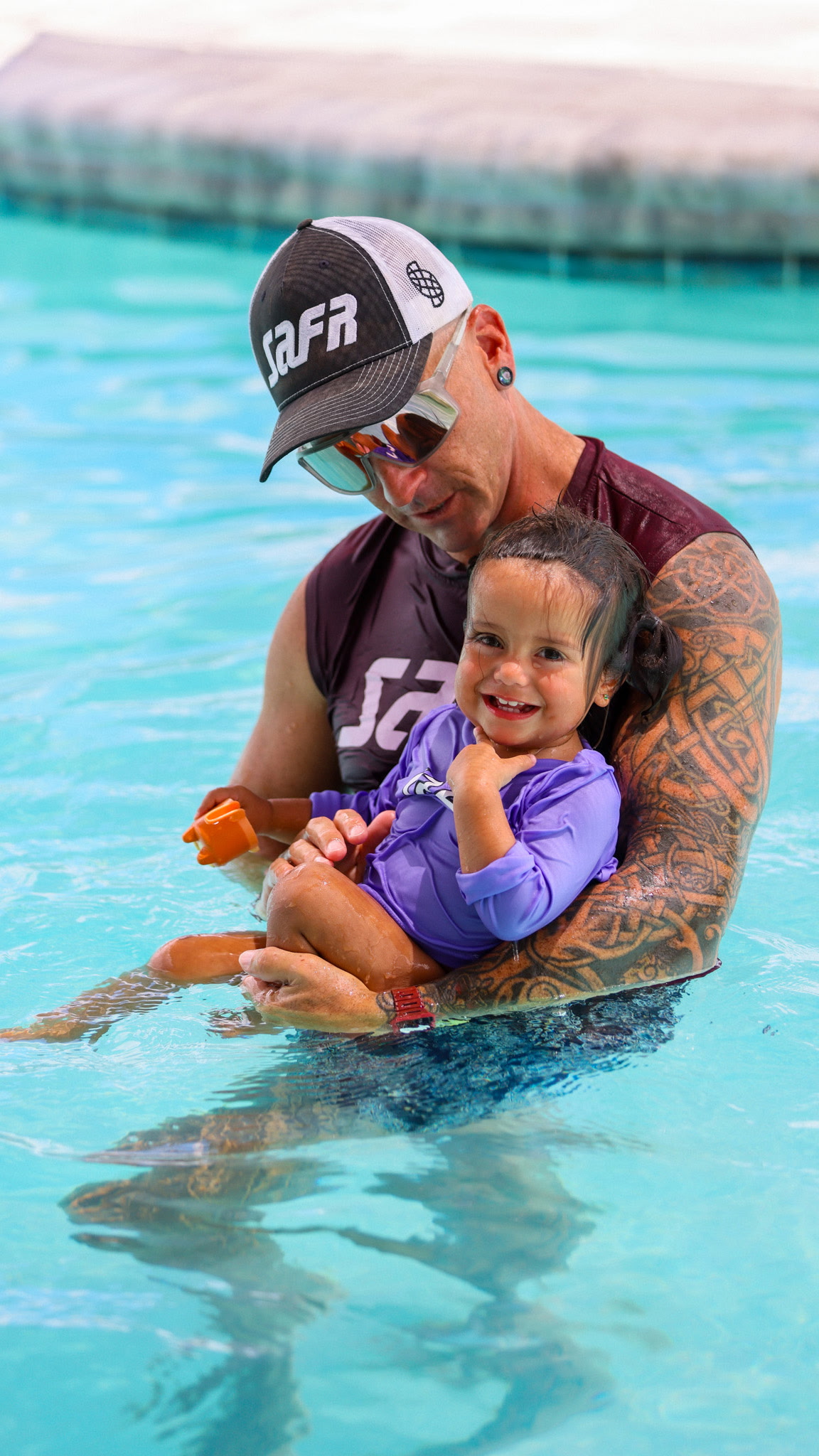
If you’ve ever watched your child shrink back from the edge of a pool, clutching your hand and refusing to jump in, your instinct might be to "fix" it.
We live in a culture that prioritizes comfort. We want our kids to be happy, confident, and fearless. We want them to have fun.
But when it comes to water, that instinct to "remove the fear" might be the most dangerous thing we can do.
The Safety Brake
Fear is not a defect. It is a biological defense mechanism. When a child who cannot swim feels afraid of the water, they are receiving a vital signal from their own survival instinct: *I do not have the tools to handle this environment.*
Think of it like heights. If a child is afraid of jumping off a building, we don’t tell them, "Don't be afraid, just jump!" We recognize that their fear is keeping them alive. It is a behavioral brake that prevents them from engaging in high-risk behavior they aren't equipped to handle.
When we force a child to "get over" their fear of water without first giving them the skills to survive, we aren't making them safer. We are actively making them *less* safe. We are cutting the wire to their internal alarm system.
Confidence Must Be Earned
There is a massive difference between *confidence* and *competence*.
We often see programs that prioritize "fun" and "comfort" in the water. They want kids to splash around and feel relaxed immediately. But if that relaxation isn't anchored in actual swimming ability such as the ability to float, tread, and navigate the water, it is a false sense of security.
Consider skydiving. You wouldn't tell a novice, "Don't worry about the parachute, just enjoy the fall." You only feel safe skydiving because you have a parachute and you know how to use it. The equipment and the training are what make the activity manageable.
The same logic applies to the pool. The only time a child should stop being afraid of the water is when they have the skills to be safe in it.
A New Approach for Parents
If you are looking for a swim program for your child, look for one that respects this reality. A responsible program doesn't rush to make your child comfortable, it rushes to make them capable.
Here is what you should look for:
Competence-First Curriculum
Does the program require demonstrated survival skills (like floating, treading, and safe entry/exit) before moving on to "fun" or play-based modules?
Objective Assessment
Are there clear, pass/fail criteria for progression? You want to know exactly what your child can do, not just how "happy" they are in the water.
Honest Communication
Are the instructors reinforcing that water is a serious environment? Avoid programs that normalize comfort without capability.
The Bottom Line
We are morally obligated to anchor water confidence in verified competency. If we prioritize "fun" over skill acquisition, we are manufacturing preventable accidents.
Let your child be afraid until they are ready. Let their confidence be a byproduct of their capability. When they finally jump into that pool, let it be because they know exactly how to get back to the surface.
